F.I., Aptos, CA, United States
Dear Charles Bernstein,
Lately I’ve been thinking with this idea from A Poetics, “poetry is aversion of conformity in the pursuit of new forms, or can be,” by you, back in the day, thinking about what it might mean now. I’m a poet writing in the afterglow of L=A=N=G=U=A=G=E poets of the 1970s in the 2020s, living on the Central California coast, feeling into what can become possible with words (closeness, community) which is probably language at its highest, while we grapple in language at its lowest (regulation, debts, surveillance) which often feels like a cage. As a 43-year-old poet coming after you, what would you say is our work now, with language, especially in this age of language generators, the dreaded AI-wave, which is really just more grammar, perhaps scarier grammar because it can so easily reproduce anti-grammatical prosody of everyday speech. I want to get more creative with poetry, its possibilities, its expansions. Are we still meant to write poems. Shall we hum them, or scream them, or moan them, or screech them like a bird? I have this compulsion to say, these little streams come spiraling out of me in the most random moments. I feel like a constant transmitter. Most days I feel nothing at all like a human. I guess I feel like a poem. But what exactly, if anything, can poems do for this horrible world? Is poetry purely for the sake of community and love, is that enough? I mean, it feels like yes, perhaps because conformity is truly so anti-love, and we need more love in this world. But, actually, what are poets really here for?
with light,
F.I.
Dear F.I.,
“Poetry is aversion of conformity in the pursuit of new forms” echoes the original American self-help guru, Ralph Waldo Emerson, though it comes to me via Stanley Cavell. Cavell discusses Emerson’s idea that “self-reliance is aversion of conformity” in This New Yet Unapproachable America: Lectures after Emerson after Wittgenstein and in the spirit of the Poetry Clinic, I prescribe that book as well as a collection of Emerson’s essays, which, as they used to say, you should always keep beside your bedside as so many nineteenth century American once did. “Emerson comforts me.”
Better beside your bedside than beside yourself –– is what I say. But Mr. Thoreau, in Walden, holds out for being “beside ourselves in a sane sense” when we think for ourselves: “By a conscious effort of the mind we can stand aloof from actions and their consequences; and all things, good and bad, go by us like a torrent.”
In “Self-Reliance,” Emerson writes, “The virtue in most request is conformity. Self-reliance is its aversion.” I love how Emerson casts virtue as the antithesis of self-reliance. Virtue is letting other people do the thinking for you and signing on to a platform. Here’s what Emerson says (with some gentle gender bending):
Society everywhere is in conspiracy against [self-reliance]. Society is a joint-stock company in which the members agree for the better securing of his bread to each shareholder, to surrender the liberty and culture of the eater. The virtue in most request is conformity. Self-reliance is its aversion. It loves not realities and creators, but names and customs.
Whoso would be a [mensch] must be a nonconformist. {S}He who would gather immortal palms must not be hindered by the name of goodness, but must explore if it be goodness. Nothing is at last sacred but the integrity of our own mind. Absolve you to yourself, and you shall have the suffrage of the world.
What is self-reliance in poetry? It’s going on your instinct, following a train of thought that is not predetermined, being willing to risk ambiguity, thoughts you don’t understand, and not being afraid to give aesthetic offense; not writing to prove you are on the right side of an issue, but to better grapple with what the devil the issue is. Poetry, the kinds of poetry I want, is all about alterations, transforming even our most cherished shibboleths into tools for exploration.
I am one of those last-of-those-’60s, out-of-the-box, diehard, free-thinking-speech “OK BOOMER!”s. I still love that “Emerson sound.” So many shibboleths, so many small signals of loyalty (to the right of us and the left &c). I say: let the shibboleths dance with one another, perhaps the Tango.
I am for cage-free poetry! Down with the bureaucratization of language! But we don’t need AI to do the packaging and the cage: we have bureaucratized ourselves, including our poetry. LLMs may automate conformity, but poets have been automating, for good and bad, for a very long time, and much of the humanist pushback (in the mainstream media) suffers from just such self-automatization. [I specifically address the issue of poetry surveillance/AI in a recent talk at Poets House in New York: https://chbernstein.substack.com/p/surveillance-correction-normalization?r=64ur5.]
What is to be done?, you ask. Throughout my life I have asked that question and I . . . done what I done. Too late for me now to do otherwise. Unlike Emerson, I don’t give advice to the Young Poet, or for that matter to the middle age of old poet. But as for poetry: there is always work to be done –– in writing but also in bringing together poets who are working toward aesthetic innovation as a practice of (even a paradise of) radical freedom. I might think such a call is a cliché, but I fear it has become a stigma. Jack Spicer said the poet was a radio receiver – you say you feel like a transmitter. Can you reverse directions? You ask, What can poems do? What are poets here to do? The answer is that poems can do whatever we can do. And poets are neither here nor there, destined to do nothing, the most aesthetically insurrectionary act of all.
The passage of mine you quote is from “State of the Art” (first presented in 1990 at The Poetry Project); it’s collected in A Poetics (Harvard University Press, 1992):
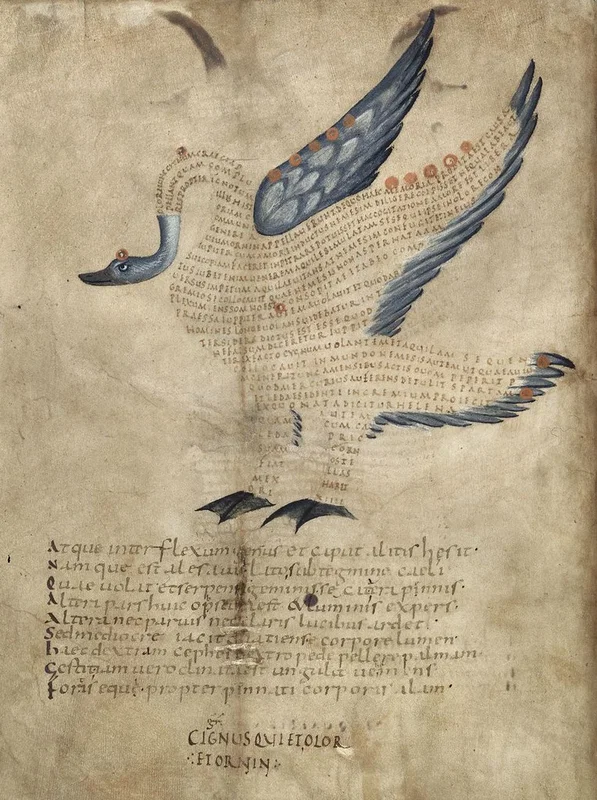
Poetry is aversion of conformity in the pursuit of new forms, or can be. By form I mean ways of putting things together, or stripping them apart, I mean ways of accounting for what weighs upon any one of us, or that poetry tosses up into an imaginary air like so many swans flying out of a magician’s depthless black hat so that suddenly, like when the sky all at once turns white or purple or day-glo blue, we breathe more deeply. By form I mean how any one of us interprets what’s swirling so often incomprehensibly about us, or the stutter with which he stutter, the warbling tone in which she sing off and on key. If form averts conformity, then it swings wide of this culture’s insatiable desire for, yet hatred of, assimilation –– a manic-depressive cycle of go along, go away that is a crucial catalyst in the stiflingly effective process of cultural self-regulation and self-censorship.
Let me end with a poem of mine, from my most recent collection, Topsy-Turvy (University of Chicago Press, 2021):
The Darkness He Called Night
Virtue’s a kind
of despair,
masquerading as care.
A bitter
current is for
virtue sweet.
Sublime wine sours
its mouth.
Snakes eat from
its hands.
Jackasses obey its
whim. Self-
nomination papers its
path. Method
is its M.O.,
holding tight to
a higher
love and fervently
displayed empathies.
Virtue’s sword
is truth, in
love with
itself, at odds
with others.
Celebrating standards it
fashions, virtue
jams miscreants, shams
malcontents, shaming
those abjure improvement.
The passion
of virtue is
reprimand. Nothing
is more beautiful
to virtue
than compelling justice
and shattering
dissent: slashes in
a pan
that will never
absolve aesthetics.