A., Toronto, Canada
For some years the artist collected and shot images that went nowhere, read theory that was never on the syllabus. Made images of blank frames, of objects, of the self, in hopes of approximating an affect. Of ghost images to communicate with the realm of the past and those who have passed. These all seemed like the frivolous preoccupation with the self, and yet the real art object remained unmade.
What really is the role of the artist in times of social and political upheaval,
in times of war,
inner and outer turmoil.
What then does it mean, to make art that is personal, as we are plagued by the depersonalization of our personhoods,
as we continue to be rendered invisible,
illegible.
What is the potential of art to tell these stories of and from marginalia.
And what of art that cannot heal,
when the studio is not a place of refuge,
when the capacity for art to make change falters.
What then remains?
other than a return,
a return to the art space as also an organizing space,
also a domestic space,
also a care space,
a living room space,
a table,
a chair,
a laundry basket,
Or just a space in our heads.
The only space that remains to hold conversations with one another.
I am uneasily searching for a reform of within myself,
a reform of my artistic practice,
no matter,
if,
it,
remains,
yet,
another,
failed,
pursuit.
Like my failure to reject the space of the academy as a becoming,
of one and the same,
of one with the monotonous hegemony of the state,
I am not radical,
I have no privilege of being a radical.
I want to be multiple,
to be more than myself,
to be a self and other,
to be in resistance of the other.
to be in resistance with the other.
but I too am rejected by the same otherness that others me.
So Instead I am interested in practices that hold space for others,
to create clusters,
connections,
concoctions.
The artist as a conduit.
The studio as a meeting place.
The artwork itself is not the object of my desire.
The production of the art object is the means by which
I/ we/ you/ all engage in the economy of the masses.
I instead hoard my art.
I hide it in crevices,
Underneath my bed,
In garage spaces,
Deep in my totebags,
with crumpled up receipts and film sleeves,
in my pockets,
Onto forgotten drives,
My work in nor legible to my working-class immigrant parents,
Neither to the neoliberal academy.
Nor to the official art academies of this country or that country.
It is a becoming that is also my own unbecoming.
Dear A, [The artist—from the margins, in times of social upheaval, inner turmoil]
The syllabus itself was never on the syllabus.
The dictionary (OED) tells us that the word is ultimately derived from a misreading of the ancient Greek σίττυβος sittybos, meaning a cauldron, or leather straps or fringes, or a parchment table of contents (migrating thru time to come to mean ‘list’).
This misprint first arose in a version of Cicero’s letters to Atticus.
In one of those letters, dated November 23rd, year 46, Cicero despairs: ‘What’s the use of writing then? What’s the use of our meeting and chattering about everything that comes into our heads?’ [translation 1918, by E.O. Winstedt].
This is the wring; the crux: this vex is where the branch buds, and doubles, and doubles. This is where the artist is asked—asks of themselves—to hold two, and a spectrum of budding unfurling other, thoughts at once.
Cicero knows this as much as doesn’t. He asks, quill to the page, as he also is himself by himself writ-back-told. The words on the papyrus scintillate meaning, but also are innate: are dead. The cat in the box is alive, and dead. And is an avatar, and a site of projection. And also very real, with very real sad eyes, and soft pelt, and untrimmed claws, and a very real need for air. But too, in the mind, très tot.
What punches holes in the box?
What portals through and between?
Who, that’s what.
An other artist.
Famously, Cicero disparaged another poet of the time, Clodia, chiding and denigrating her publicly. She pierced holes in the box of his tidy-seeming thoughts. Clodia (originally Claudia, but having renamed herself Clodia to align more plebian (—she had love affairs [willing? forced?] with enslaved people/they with her)), was a faceted, dyadic poet (—I suspect human facetedness is a superpositional human theme; a global motif.). None of her work survives [*throws frustrated hands to sky*], but her lover Catullus’ work does [*hands; sky*]. It is thought that Lesbia is perhaps the moniker assigned Clodia by Catullus in his poems.
Here’s one [as translated by Stephen Mitchell]:
My dear Lesbia […]
Suns can die and then rise new the next morning,
but for us, when our little light has vanished,
one vast night must be slept and slept forever.
So come, sweetheart, and give me first a thousand
kisses, then you might add a hundred others,
then a thousand, and then another hundred.
And then, once we have added tens of thousands,
let’s go bankrupt and cancel the whole number […]
Let’s go bankrupt and cancel the whole number.
You can, as an artist. You can lovingly raise up all the stuff, and then: snuff. [Also? lovingly?]
You can designate everything a sketch, with no apex. Your art can jape, deceive, cache. Limn, guess, desire, suggest. You can art as furniture. Which is fine: let it hold you; let it bear your weight. You can Grendel atop it, and hoard. [Though: a tree listing, falling, in a forest, and how unsound that is, you see?]
You search uneasily for reform, dear Writer! I would so-gently counsel: rejoice! You have form! And you make it too, in this very letter: commas, structure; thoughtful tabs, and space. Repetition.
Begin there.
Repetition: begin again there.
Orchestrate: what goes where, for you. How best to express.
How to make meaning.
How to unmake trite.
‘What’s the use?’
How much energy expended to trouble that pool? [“So that”, as troubled/troubling Nietzsche writes, “it might appear deep?”]. How much is spent in wrestling Clotho and unravelling that thread? In fearing Atropos’ snip?
‘What is the role of–’ is, likely, a red herring.
Is bait without hook/ hook sans bait.
Is double hook?
Also: that question might not be y/ours to ask? Though all the other questions are, if we heed Anton Chekhov, who writes that the role of the artist is to ask questions. But that thorny particular Q, why art? [as verb!], record-scratches the artist backwards, into caltrops; into rue. The artist’s degree of radicality is perhaps not for them to decide. Is more for the exterior longview. The poet’s self-view is too myopic; too tethered; too bell-jarred.
Why art? is the question of the endless sleep.
Rather, just do.
Trust the spectral qualities of the glean; of the magpie coruscate. Trust your [healthy, consensual] attraction. Ennoble your curiosity. Enable your gentle reach (—egad, go not the way of the Midas-ing colonizer, but rather of St-Vincent Millay with her forswear: “I will touch a hundred flowers and not pick one”).
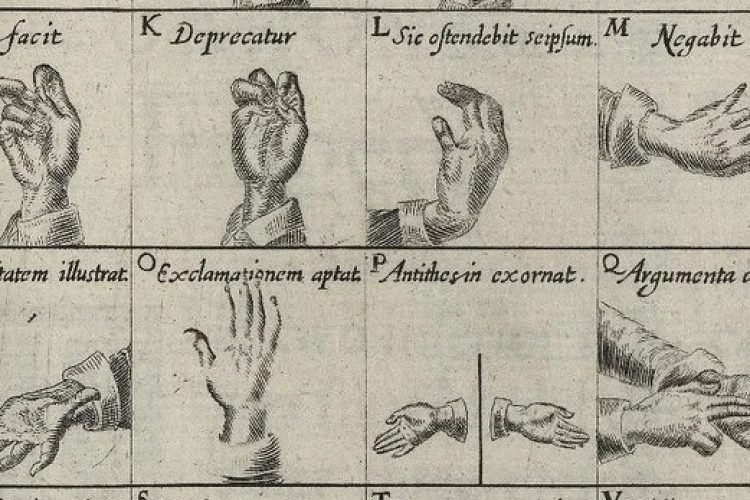
Take up the tool: see how art glimmers inchoate in the space between the hand and it? See how the hand activates the tool? Hear now how art is the fasten of the nail, and also the yoke’s rend? How really it is born in the frictive moment of impact/lost contact? Of miscommunication, as across generations? [Ever too, I seek to remember: we don’t know the depth of the comprehending state of the other (locked-in syndrome, and all that!). A best practise is to assume highest common denominator in common sentience, and work back. (Also, the languages cornucopia: gestural, written, visual, rhythm.. say it, if you wish, more than once, and in many ways!)]
So: art nasces in the unsure oscillation that finally
portals
through.
It’s a tunneling margin as much as the bucolic field-page. It’s the golden mole that can’t see its own gorgeous poils. It’s a necessary argument with Lachesis, where you plead a capstan; coy-suggest another inch; grab the end and flee in unravel; grab the end and tuck it firmly in.
End, don’t end. Begin, don’t begin.
The poet Fred Moten speaks with the poet David Joez Villaverde:
‘Well, the weak force in physics is a force of unbinding. It’s the force that tends towards a kind of discomposition, or incoherence—and there’s an interesting moral element perhaps to why it is that this force is considered weak, as opposed to strong. There’s no accounting for the taste of physicists when they come up with their terms. The point is that there is this tendency in language and beyond, if there is such a place or thing, for incompleteness, which is not driven in the first instance by the very idea of the first instance. Beginnings and ends are bracketed.
And so what’s at stake is a kind of continual investigation of this beginningless endlessness that we seem to be involved in? Maybe once the hegemony of the powerful, and I think delusional, ideas of beginning and ending are challenged a lot of other possibilities open up’.
And on the brilliant heels of this, I must interrupt myself here to say: I don’t mean that nothing has meaning, nor do I intend to deepen the crevasses of any crises of meaning, nor to en-flat. I mean more that meaning is a vacuum/is a weather balloon. I don’t champion here a level or levelling mind, nor heart. Relativity, sometimes, yes. But also: things by degrees. My tooth aches/ a child was vaporized by the most vile forces. These are not comparables. I do not want this latter to leave me in any kind of state of equanimity. These things are not the same pains. ‘The work of the artist’, says Audre Lorde, ‘is to turn her rage into flowers’. Not, I think she might’ve meant, to sublimate and simply transmogrify the rage, but to thaumaturge as an act of resistance. To say to the punishing force: thus far, and no further. To flourish in the face of; despite. To suggest: here you meet our thicket; this Garden of Resistance; these Diggers with whom/which to contend. Rage-to-flower as an act of calibration, and of sustain.
Artists burns out inhabiting a state of ceaseless ire. And existence (of person; of art!) is the most potent form of resistance. And communication is existence writ visible.
So ask the question. Scorch and mark. Puncture the brick.
(And, gentle reminder: weeds are flowers. Flowers are weeds. [Also, see Noor Hindi].)
Clodia’s work did not [at this point we think] survive. As, like, an integral work or immaculate vellum. As a readable physical text. But she was known in her time, and her words were seeded and woven through those who came after her. Sulpicia [writing in the late first century] might’ve carried these forth. Forty of her lines travel through time to us.
Here are eight, as translated by A.S. Klein:
Let me plant the tender vines at the proper time,
tall fruit-trees, myself a rustic, with skilled hands:
nor let hope fail, but deliver the piled-up fruits,
and the rich vintage in overflowing vats,
since I worship wherever there’s a stump left in the fields,
or an old stone at the crossroads, wreathed with flowers:
and whatever fruit of mine the new season brings
I set as an offering before the god of the fields.
Myself a rustic, with skilled hands.
This. The artistpoetmaker as amateur, with skilled hands [I’d add, of the best: skilled heart and mind as well]. If artist is a mode (rustic, goblin, aeolian, all-wheel; novitiate, perish, bloom, weed), then art is the travel between (velocity/locate/timespace/translate). [Oh! Plus, tenderly: No pursuit is failed, per se. Pursuit as undertaking excludes attainment. The strictures of the pursuit are those of the approach, or of the journey, or dénouement. No goal.]
Et: the adoration of the stump! The veneration of the chopped!
James Baldwin quotes and unpacks Shakespeare:
“And Shakespeare said—and this is what I take to be the truth about everybody’s life all the time—: Out of this nettle, danger, we pluck this flower, safety. Art is here to prove, and to help one bear, the fact that all safety is an allusion.”
I’m in awe: I agree. All times are times of upheaval. All worst things might nest best things (—cow bird, I’m looking at you). All best branches can bear awful fruits. That those who feel the violent reverberations of these upheavals and nettles most often repeats is so fucked and unfair, and this should be seen, and they of this relieved. Art ought to ask hard Qs, and illume dark, for-granted corners.
Like plants, art works are light-eaters. They flourish most when exposed. Like fields, artists are rejuved by tilling and turning over, and by fallow. And may perish in isolation, or conditions of monoculture. Or of being looked at (by self/ by other) too closely.
“I secretly think I might be one of those”, Louise Glück says in an interview, referring to poets. “I might be..”
But her sentence doesn’t close.
“They tried to bury me”, confirms Sinéad O’Connor. “They didn’t realize I was a seed.”
Ask maybe: what do you secretly already know?
And then: take to the razed field, pen as seed.
*hands*.
*sky*.
And, with love, try these:
My distress feels like a broken vibrating bed.
I am not a good manageress of money.
Beneath all shameful suffering I am quite capricious…
I have a buoyant feeling of splendor even though everything is
ordinary…
~Chelsey Minnis
Yeats. Yeats. Yeats. Yeats. Yeats. Yeats. Yeats.
Why wouldn’t the man shut up?
The word works me like a spike harrow:
by number nine maybe I get the point.
It’s all in books, save the best part; God knows
where that is: I found it once, wasn’t looking.
I’ve written all the poems already,
why should I write this one:
I’ll read Keats and eye the wheather too,
smoke cigarettes, watch Captain Kangaroo.
Big stones, men’s hands, the shovel
pitched properly. The wall of walls rises.
If I weren’t gone already, I’d lie down right now:
have you ever heard children’s voices?
Sometimes i think the stars scrape at my door, wanting in:
I’m watching the hockey game.
Likely there’s an answer: I’m waiting,
watching the stones.
~John Thompson
My primary device is personification, says Nature. Do your associations
consider my mercurial elements?
Nature is kind of over my head
the speech sweeps in land is overtaking
Nature keeps wanting to hang out, and I’ve been looking for an excuse
to use the phrase “hackles of the night” but you can’t always get what
you want.
Every date feels like the final date bc we always find small ways of being
extremely rude to each other, like mosquito bites or deforestation
like I think I’m in an abusive relationship w/nature
then again I think I’m in an abusive relationship w/myself, I whisper after
pinching my squishy belly
but for reals I leave yr apt in the early train of my hangover thinking
that was a weird bump like all jostled but back on the open road
then like clockwork u txt two days later sayin, greetings from the
Pines—you free Tuesday night?
and I’m both charmed and suspicious, which is probably redundant,
and also the soil of my landscape and a landing strip.
~Tommy Pico
Shëmu Sipu
for Deshkan ziibi
Water moves like a corkscrew
churning soil and rock, leaving
meander and orphaned ponds
where the curvature of water
is simply too strong to continue.
Here, in these bends our world
is rewritten, over words tremble
less in sound, more in connection.
Yet, all of it rests on understanding
that the first gift of creation
is the turtle shell we tread upon.
Water the certain cut of motion
on this land, the divine that leads
us ashore, to places life finds us.
~D.A. Lockhart
Black Orchid
It was the summer of kinetic sand.
It was the summer of kinetic sand but it wasn’t Summer yet. It was not even pro-
perly Spring. It as almost May but Winter kept curving its slim wriest and grasping
fingers around anything in the soil, anything that was trying to grow. Freezing the
shoots into nervy articulations, spindled leaves raised like the hand of a questioner.
In place of smashed robin’s eggs, the sidewalks were littered with kinetic sand:
purple, turquoise, and pink. Laced with oil and studded with carcinogens to
make it sparkle, it stayed moist forever, and the children like to pat it into
cervices and surfaces—the concrete, the grooves of their jeans, their teeth.
There was nothing kinetic about this sand. It stayed patted into the shapes it
was made on.
It glutted the sidewalks in clumps, it cluttered the gutter. It clung to soles and treads.
There, there.
[…]
~Joyelle McSweeney